“Stitching the Self” workshop slides with notes linking the deck pages to student feedback.
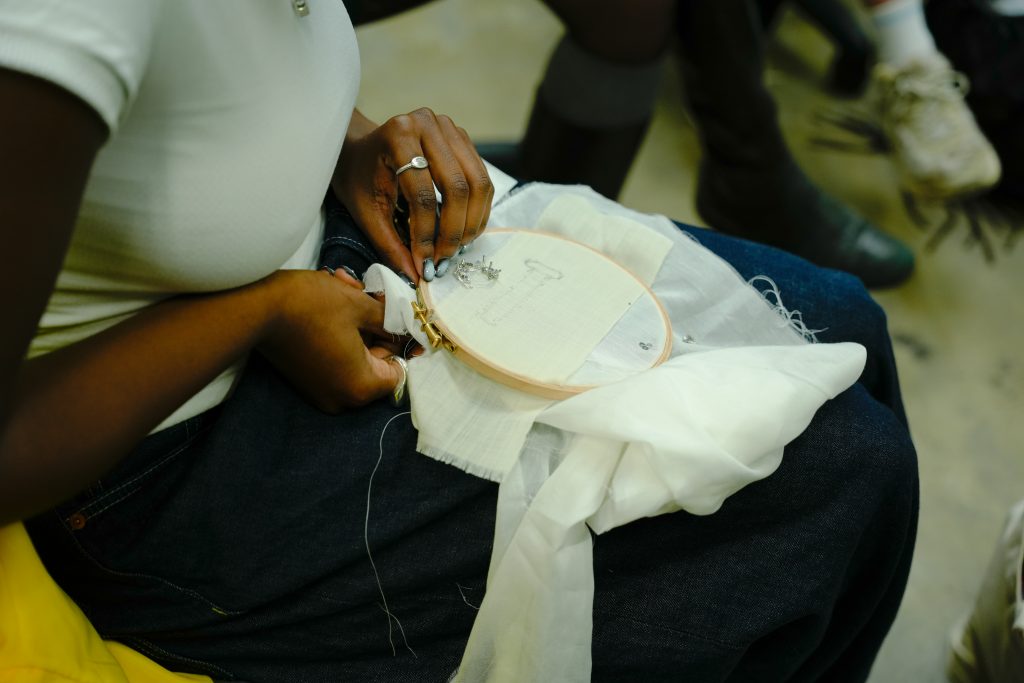
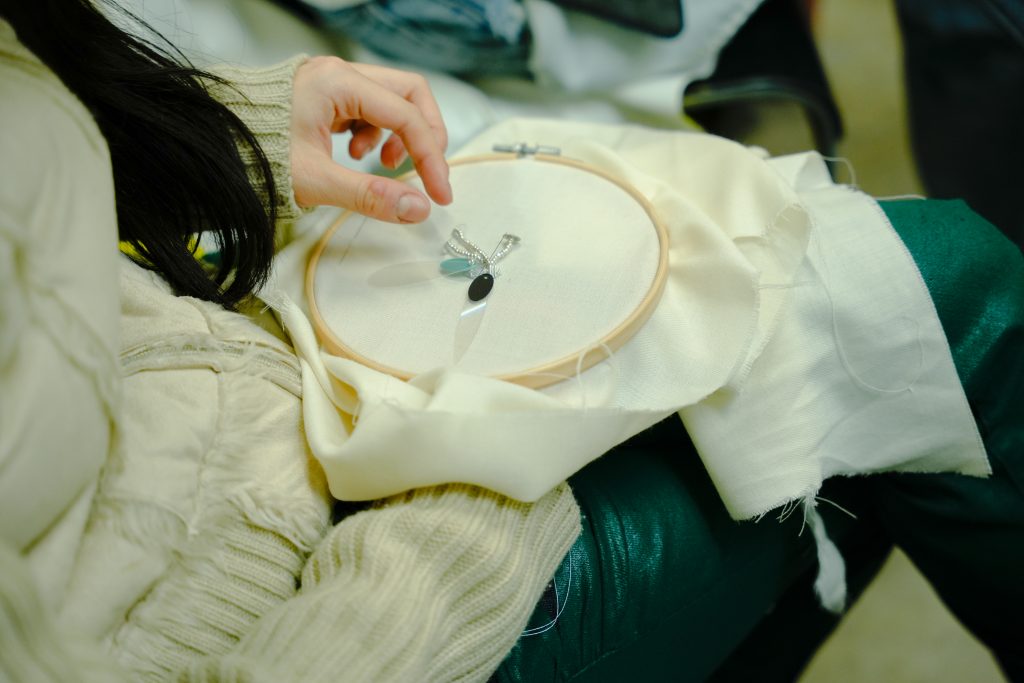
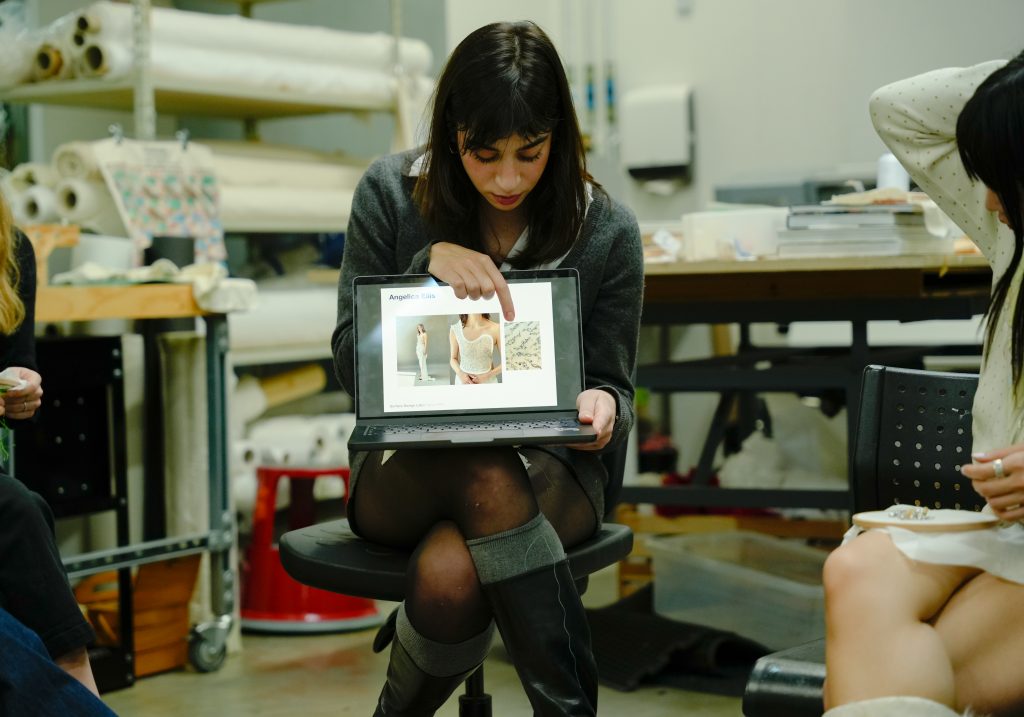
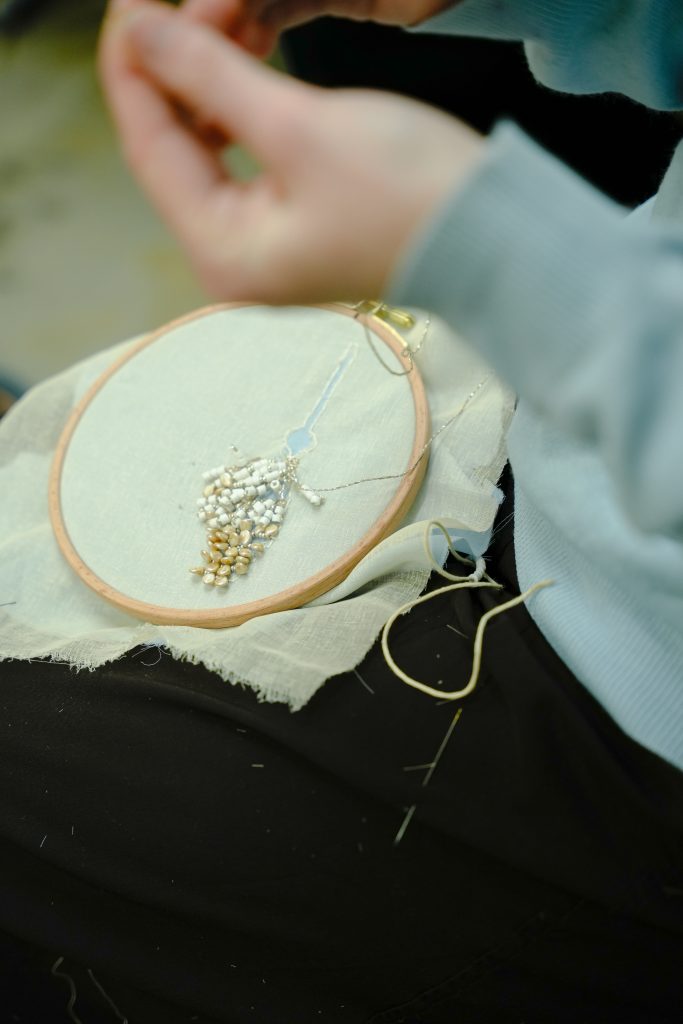
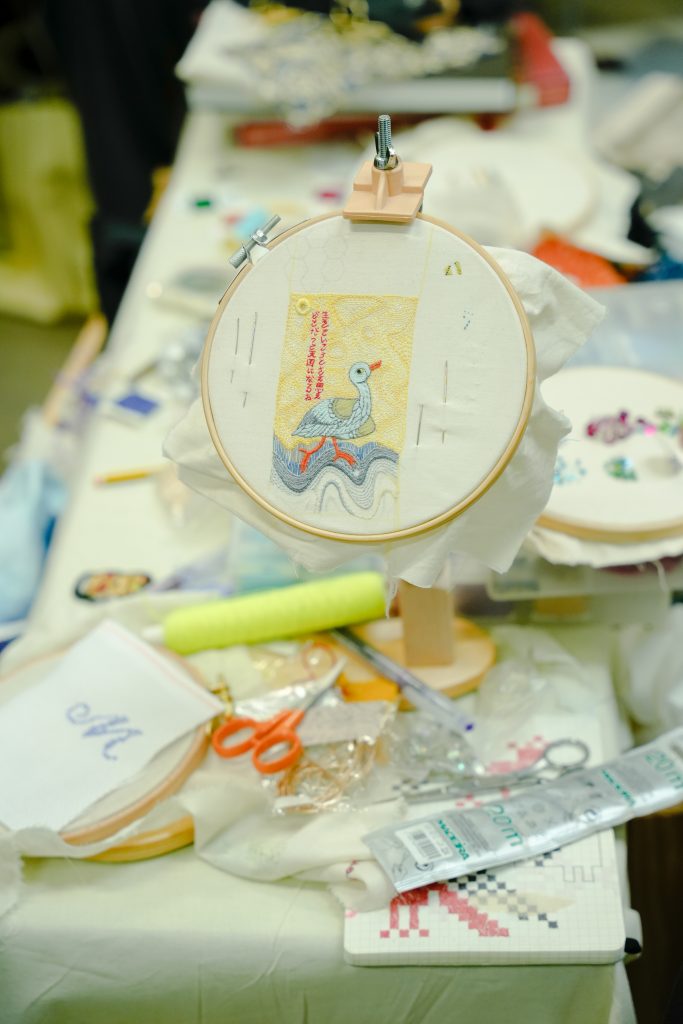
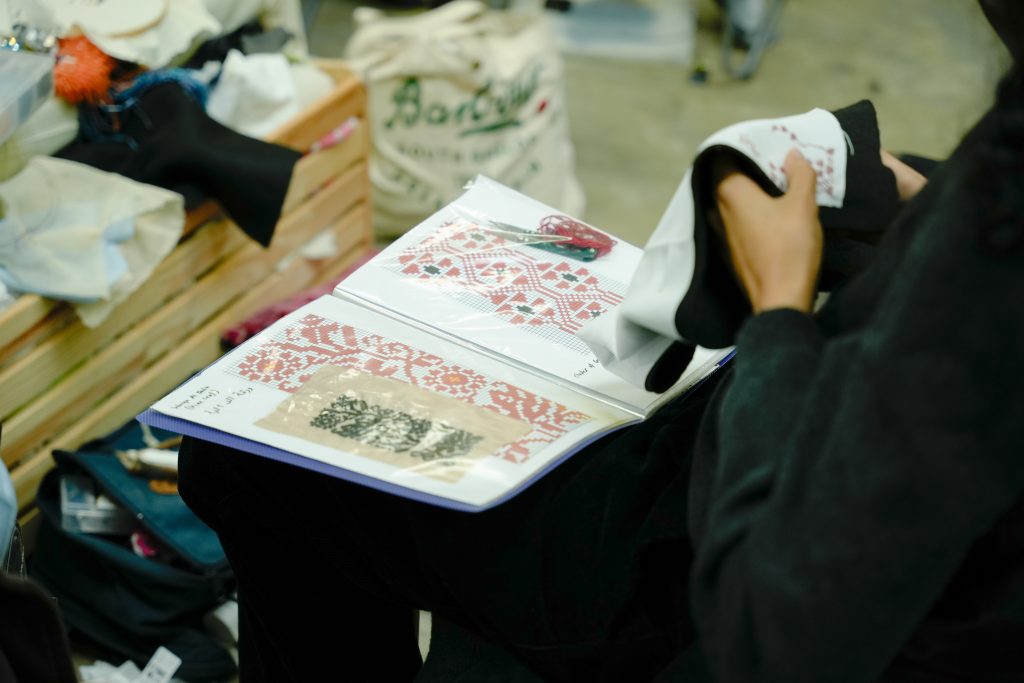
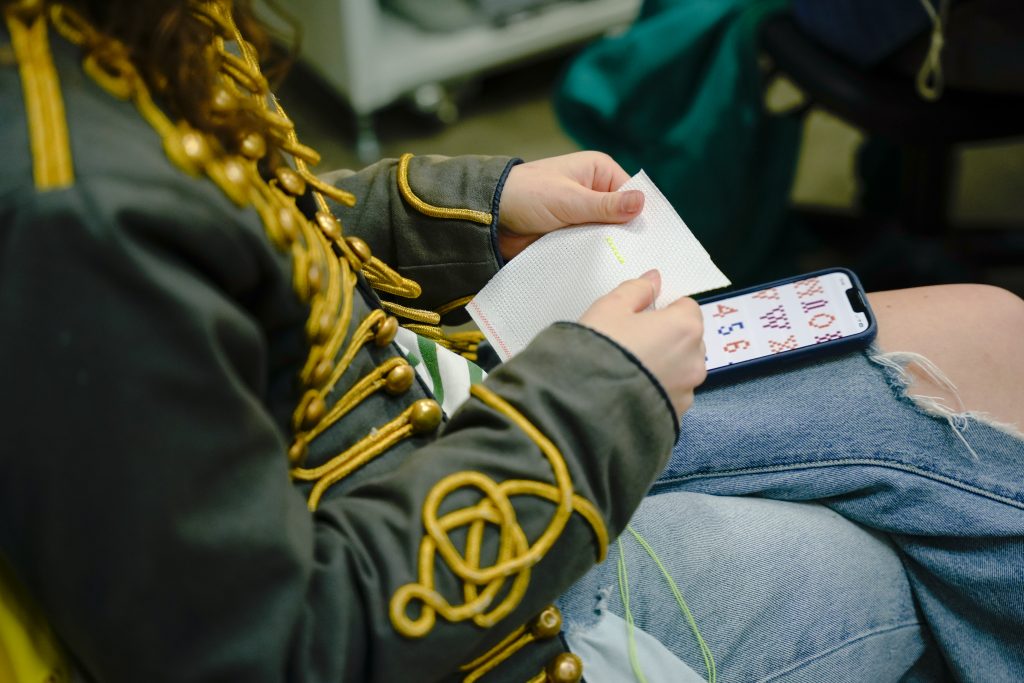
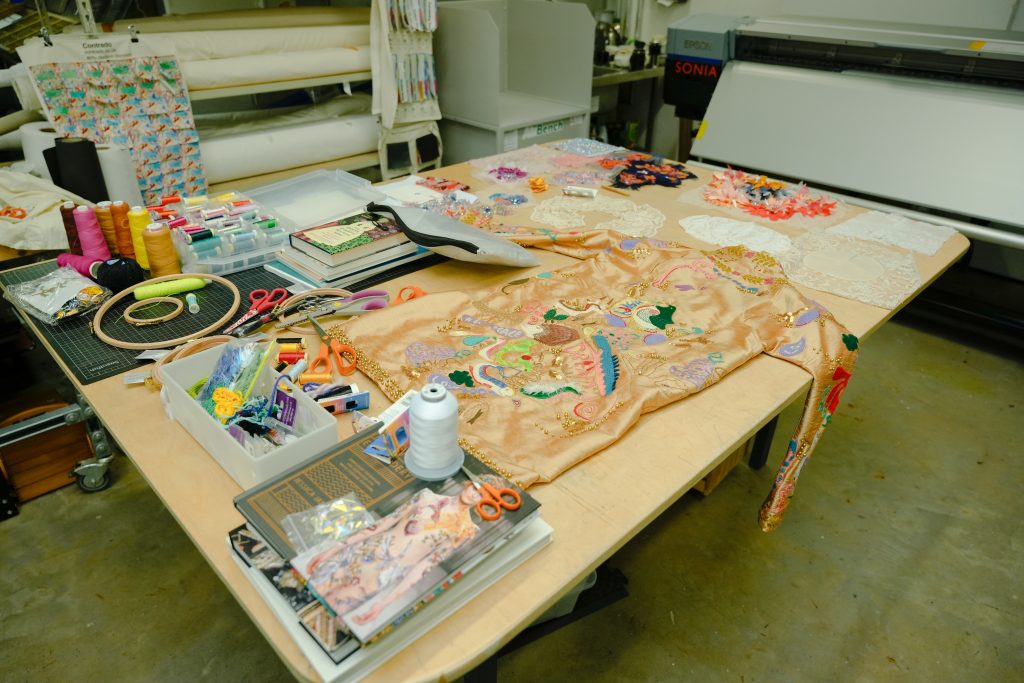
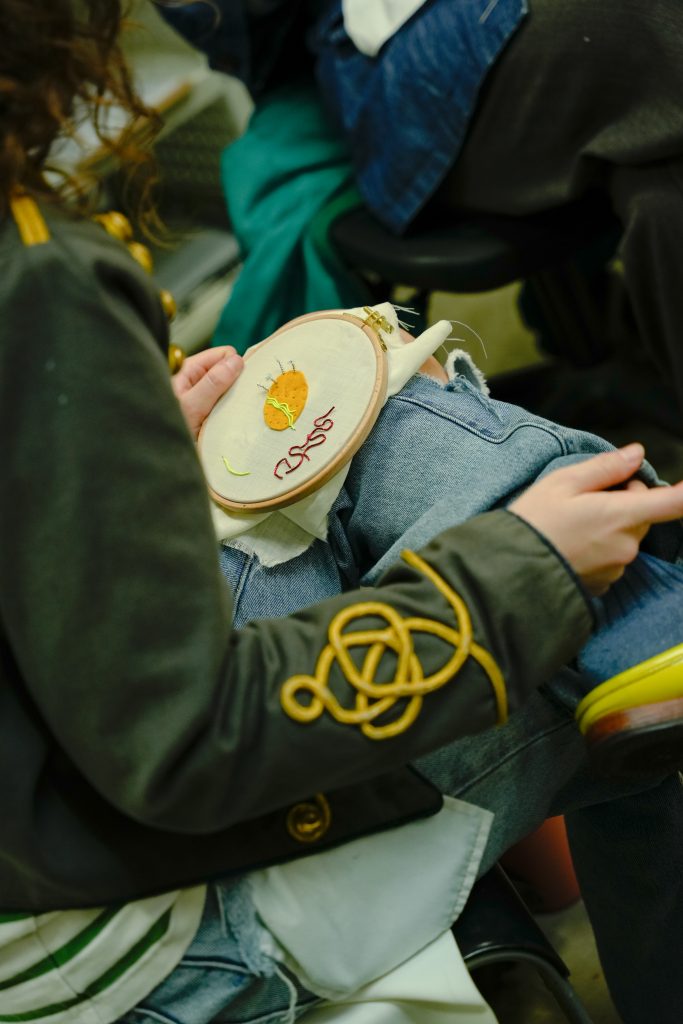
Photos of “Stitching the Self” workshop taken by Thanseela Abdul Kabeer @thanseela.photography
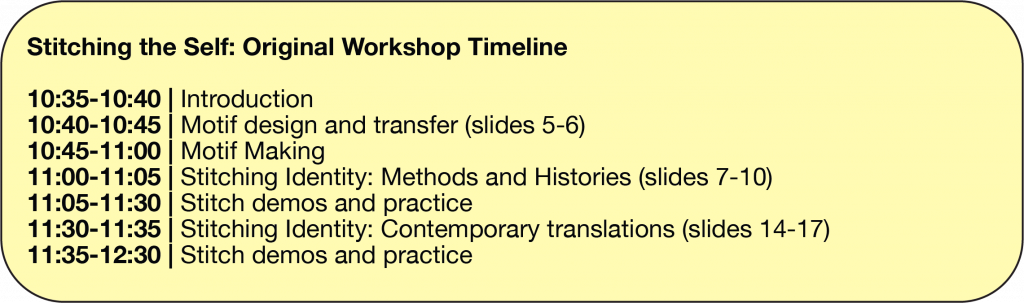
The original plan used to structure the workshop
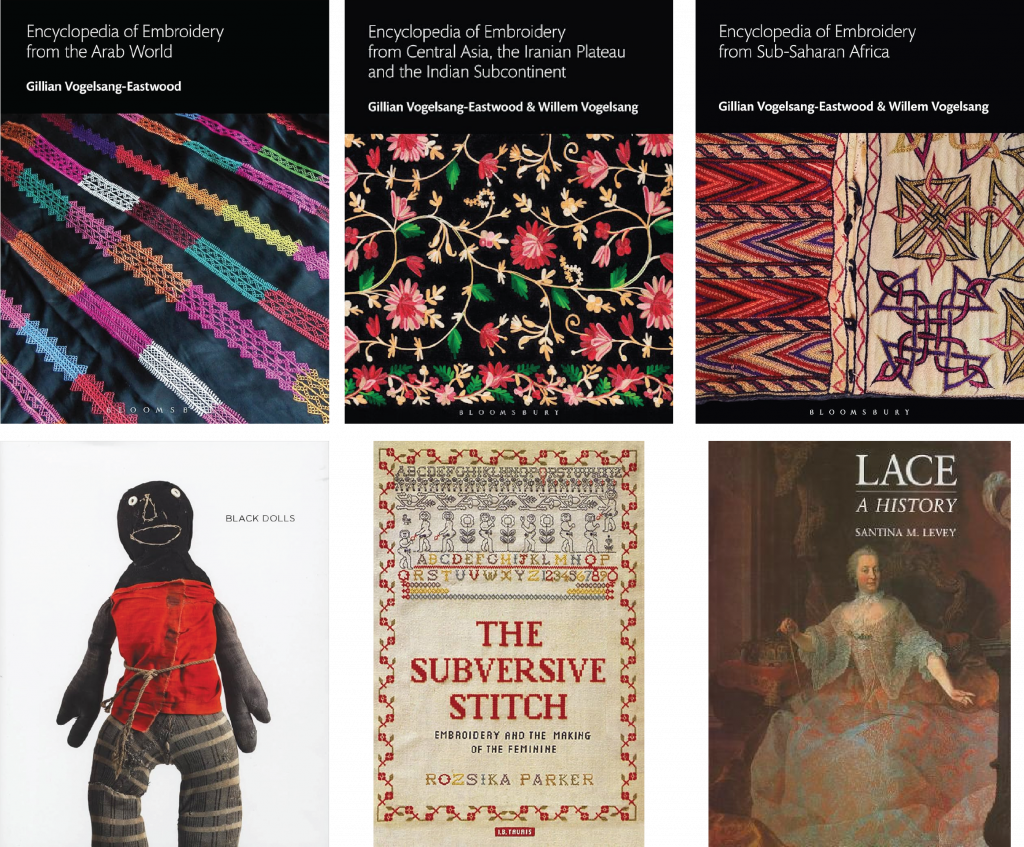
Some of the books brought to the workshop for students to reference during the workshop. Most of the books provided were my own and are not available in the UAL library.

The follow up email sent to the course leader in response to student feedback regarding the dissemination of resources for continued learning
Reflections
During the workshop, student feedback regarding time constraints became particularly salient. As a technician, the tension between reaching large numbers of students and providing sufficient contact time is a persistent challenge. As Sennett notes, craft knowledge develops through sustained, repetitive, hands-on practice (something several students gave feedback on) is an element to craft making and mastery that cannot be replaced (Sennett, 2008:52). While this paced learning feels non-negotiable, it must be negotiated within institutional constraints, where frustrations arise less from the work itself than from how it is organised (Sennett, 2008:73). Although the workshop could only initiate skill development, it planted the groundwork for further autonomous learning. Nonetheless, student feedback highlights the need for more guided opportunities to support the development of tacit, embodied knowledge (Sennett, 2008:77), which remains central to my approach as both technician and maker.
I also became increasingly aware of how staff hierarchies – often muted by our own egalitarian working practices- were made more visible during the workshop. The absence of an overlap day meant there was no opportunity for collective preparation, which resulted in colleagues looking to me for direction. This momentary amplification of inter-staff power dynamics can be linked to the institutional grading system that differentiates technicians as either ‘specialist’ or ‘support’. As Sennett observes, workshops are spaces where people “deal face-to-face with issues of authority” (2008:54), and this dynamic extended beyond the student–teacher relationship to our staff team. In the absence of a shared agreement on roles, this looseness allowed institutional hierarchies to reassert themselves, producing micro-level forms of oppression among colleagues (Freire, 2005). In reality, each team member brings distinct skills, experiences, and approaches to making. Clarifying roles in advance would allow this individual and collective expertise to be more fully recognised and exercised, enabling greater autonomy and collaboration within the workshop setting.
Finally, I experienced discomfort around the sense that my approach was shaping students’ learning, reflecting broader assumptions that technical staff do not ‘teach’ in the same way as academics. Edward Said’s reminder that we are “of the connections, not outside them” (Said, 1983) reframes this discomfort, rejecting the possibility of neutral knowledge production. Situating ourselves within meaning-making and teaching processes (Hall, 2019 :222; De Genova, 2013:252; Wekker, 2016:3), rather than attempting an impossible neutrality, is essential to resisting the reproduction of dominant Western narratives and addressing the “unacknowledged reservoir of knowledge and feelings” that often escapes consciousness (Wekker, 2016:3, 19).
References
De Genova, N. (2013) ‘We are of the connections: migration, methodological nationalism, and “militant research”’, Postcolonial Studies, 16(3), pp. 250–258. doi: 10.1080/13688790.2013.850043.
Hall, S. (2019) Essential Essays, Volume 2: Identity and Diaspora. Edited by D. Morley. Durham, NC: Duke University Press. doi: 10.2307/j.ctv11smnnj.
Said, E.W. (1989) ‘Representing the colonized: anthropology’s interlocutors’, Critical Inquiry, 15(2), pp. 205–225.
Sennett, R. (2008) The Craftsman. New Haven, CT: Yale University Press.
Wekker, G. (2016) White Innocence: Paradoxes of Colonialism and Race. Durham, NC: Duke University Press.